As companies scale, marketing teams like Galib’s often struggle to define where content marketing ends and product marketing begins. While both disciplines aim to drive growth, they operate at different strategic layers and serve different stages of the customer journey.
This guide breaks down content marketing vs product marketing, explains responsibilities, goals, workflows, and career paths, and helps you decide which approach (or combination) your business actually needs.
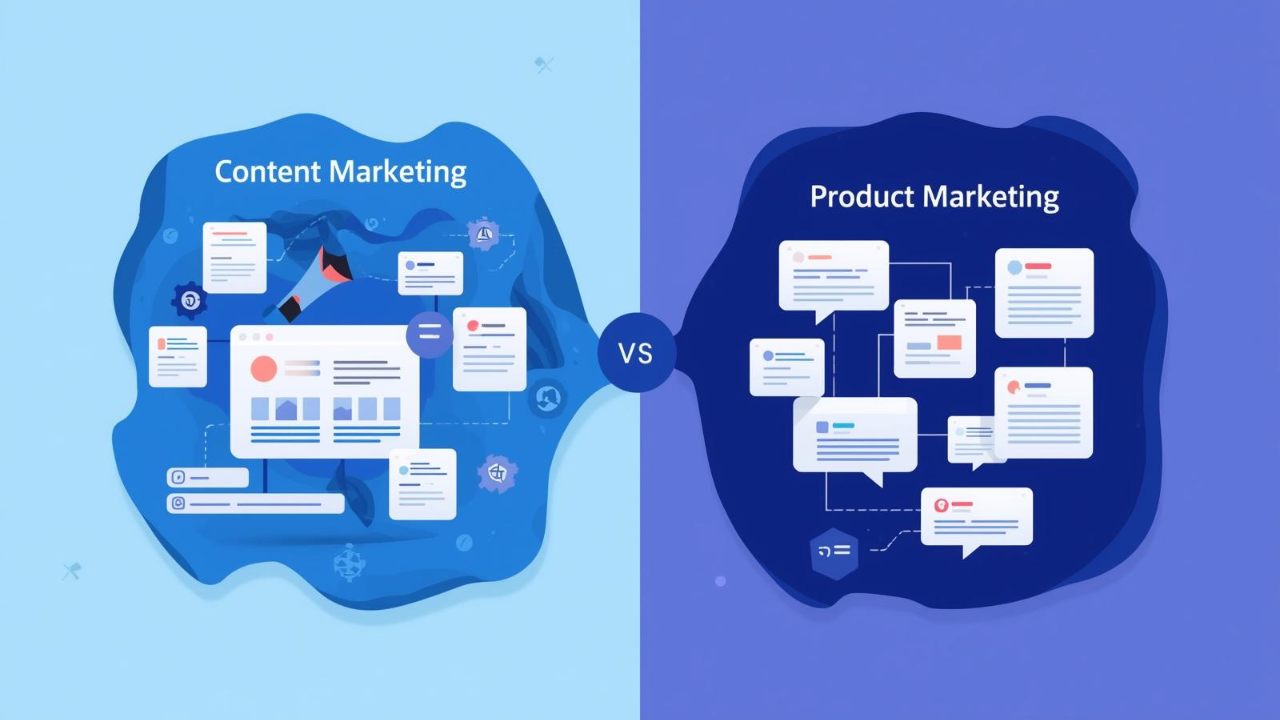
What Is Content Marketing?
Content marketing focuses on attracting, educating, and nurturing an audience through valuable, non-promotional content.
Content Marketing Definition
Content marketing is the practice of creating and distributing educational or informative content, such as blogs, guides, videos, and newsletters, to attract potential customers and build long-term trust.
Core Content Marketing Responsibilities
- SEO-driven blog creation
- Educational guides and resources
- Social media and distribution strategy
- Lead nurturing content
- Thought leadership
Content marketing primarily supports the top and middle of the funnel, helping users discover problems, understand solutions, and trust a brand.
What Is Product Marketing?
Product marketing focuses on how a product is positioned, communicated, launched, and adopted in the market.
Product Marketing Definition
Product marketing is the function responsible for defining product positioning, messaging, and go-to-market strategy and ensuring that the product resonates with the right audience.
Core Product Marketing Responsibilities
- Product positioning and messaging
- Ideal customer profile (ICP) definition
- Competitive analysis
- Product launches
- Sales and customer enablement
Product marketing operates closer to conversion, adoption, and retention, ensuring that the product’s value is clearly understood.
Content Marketing vs Product Marketing: Core Differences
📊 Comparison Table
| Aspect | Content Marketing | Product Marketing |
| Primary Focus | Audience education | Product positioning |
| Funnel Stage | Top–Mid funnel | Mid–Bottom funnel |
| Core Output | Blogs, guides, videos | Messaging, launches |
| Success Metrics | Traffic, leads, engagement | Adoption, revenue |
| Ownership | Brand & content strategy | Product narrative |
| Time Horizon | Long-term growth | Launch & lifecycle-driven |
This is the fundamental distinction in content marketing vs product marketing: one builds demand, the other converts and sustains it.
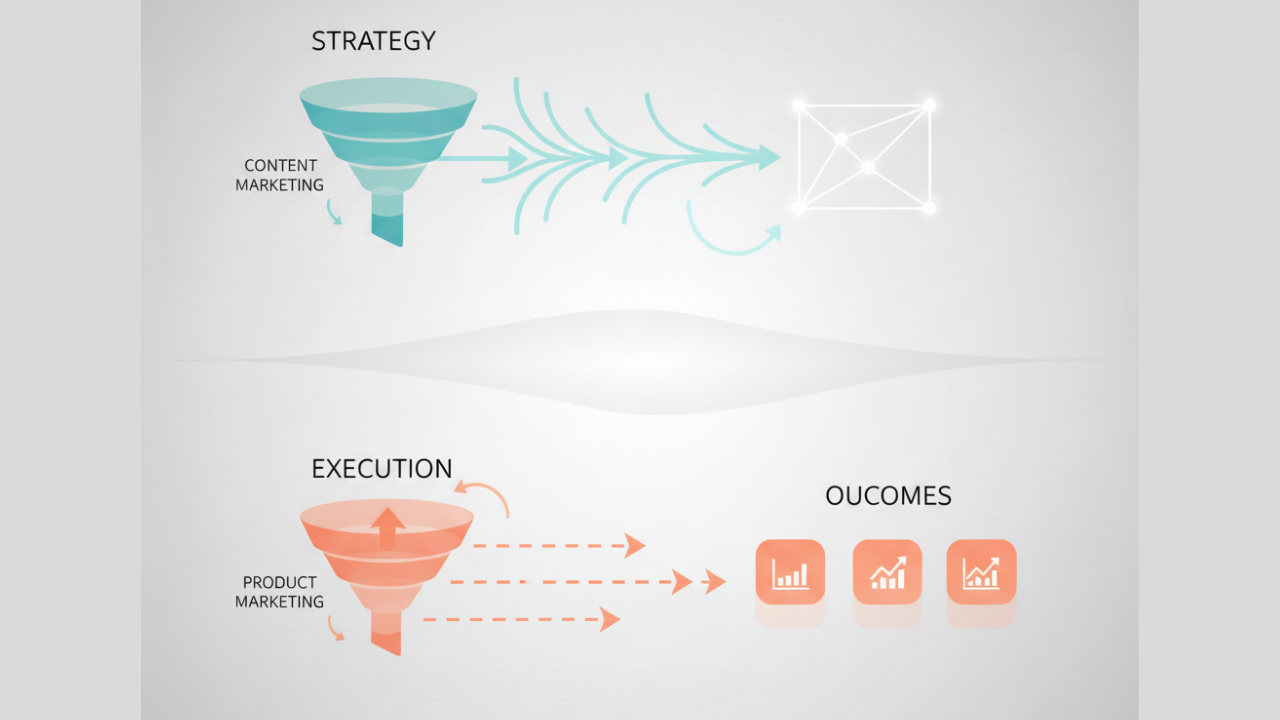
Goals: Content Marketing vs Product Marketing
Content Marketing Goals
- Increase organic traffic
- Build topical authority
- Educate potential buyers
- Generate qualified leads
Product Marketing Goals
- Clarify product value
- Improve conversion rates
- Enable sales teams
- Drive adoption and retention
Understanding these goals helps avoid internal misalignment when comparing content marketing vs product marketing strategies.
Workflows: How Each Function Operates
Content Marketing Workflow
- Keyword and topic research
- Content planning and editorial calendar
- Creation and optimization
- Distribution and promotion
- Performance analysis
Product Marketing Workflow
- Market and user research
- Positioning and messaging development
- Launch planning
- Internal enablement
- Post-launch optimization
These workflows intersect but they are not interchangeable.
When Do You Need Content Marketing vs Product Marketing?
You Need Content Marketing If:
- You want to grow organic visibility
- Your audience needs education
- You rely on inbound acquisition
You Need Product Marketing If:
- You’re launching or repositioning a product
- Sales teams need better messaging
- Conversion or adoption is weak
Most mature SaaS companies invest in both, aligning content marketing to fuel demand and product marketing to convert it.
Career Paths: Content Marketing vs Product Marketing
Content Marketing Career Path
- Content Writer
- SEO Specialist
- Content Strategist
- Head of Content
Product Marketing Career Path
- Product Marketing Manager
- Senior PMM
- Group PMM
- Head of Product Marketing
Professionals often transition between these roles, especially when moving closer to product strategy.
How Content Marketing and Product Marketing Work Together
High-performing teams don’t choose content marketing vs product marketing—they integrate both.
Examples:
- Product marketers define messaging → content teams scale it via blogs and guides
- Content insights inform product positioning
- SEO content supports product launches
This collaboration turns marketing into a revenue-aligned growth engine.
Frequently Asked Questions (FAQ)
Final Thoughts
The debate around content marketing vs product marketing is not about choosing one over the other; it’s about understanding where each creates impact.
Content marketing builds trust and demand. Product marketing turns demand into adoption and revenue. When aligned, they form one of the strongest growth systems in modern marketing.